









Índice
- Introdução: Fibras de vidro picadas – O principal componente de reforço para a fabricação de eletrônicos e equipamentos elétricos.
- Lógica de seleção subjacente: três dimensões essenciais que determinam a adequação do produto.
- Matriz de resina: a principal prioridade na seleção.
- Tipo de fio picado: Linha Vermelha – PA e PP NÃO são intercambiáveis
- Especificação de Comprimento: O Processo de Balanceamento de Parâmetros Essenciais e o Desempenho
- Compatibilidade de Processos: Requisitos Específicos para Processos BMC/DMC
- Estratégia de seleção baseada em cenários: Correspondência precisa para diferentes produtos
- Componentes de veículos: priorize a relação custo-benefício, equilibre desempenho e processo.
- Eletrônica Automotiva / Elétrica Industrial: Priorizar Desempenho, Garantir Confiabilidade e Durabilidade
- Comunicação 5G / Eletrônica de ponta: priorize o desempenho extremo e atenda a requisitos de alta precisão.
- Conceitos errôneos comuns: evite armadilhas de seleção e reduza os riscos de qualidade.
- Conselho final para a seleção: Adote uma mentalidade de custo do ciclo de vida.
- Para concluir
- Fale com um consultor de vendas
- Entre em contato conosco por e-mail.
- Solicitação de orçamento/consulta sobre o produto
- Você está considerando o uso de fibra de vidro em sua aplicação?
- Deseja conhecer os parâmetros técnicos e a ficha técnica (TDS) dos produtos?
- Tem interesse nesta especificação?
- Como podemos te ajudar?
Introdução: Fibras de vidro picadas – O principal componente de reforço para a fabricação de eletrônicos e equipamentos elétricos.
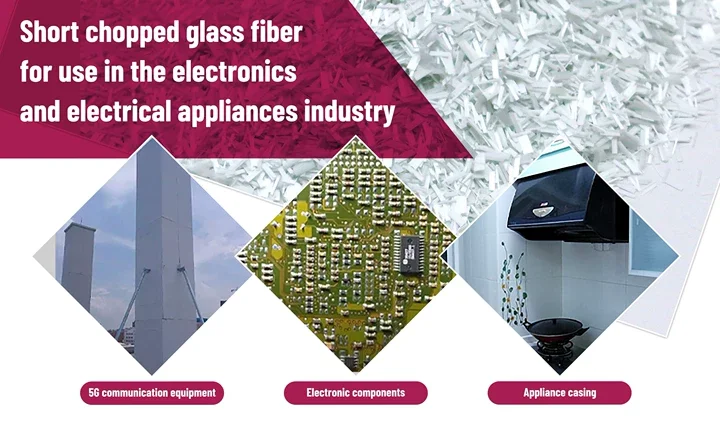
Na indústria eletrônica e elétrica, a leveza, a alta resistência, o isolamento, a estabilidade dimensional e a resistência à temperatura são fatores essenciais que determinam a competitividade no mercado. Desde carcaças de eletrodomésticos e componentes eletrônicos automotivos até peças de isolamento elétrico industrial e equipamentos de comunicação 5G, fibras de vidro picadas Desempenham um papel insubstituível. Ao serem combinados com diversas matrizes de resina, melhoram significativamente as propriedades mecânicas, a resistência ao calor e a estabilidade dimensional do material, mantendo ao mesmo tempo um excelente isolamento elétrico. Isso os torna um material fundamental para alcançar "alto desempenho, leveza e longa vida útil" em produtos eletrônicos e elétricos.
No entanto, durante o processo de aquisição e aplicação, muitos clientes enfrentam dilemas semelhantes: Qual tipo de fibra cortada é adequado para diferentes sistemas de resina? Qual especificação de comprimento equilibra os requisitos do processo de moldagem e o desempenho do produto? Por que as fibras cortadas de PA e PP não podem ser usadas indistintamente? Quais são os requisitos especiais dos processos BMC/DMC para fibras cortadas?
Como fornecedor profissional com vasta experiência na indústria de fibra de vidro, recebemos inúmeras consultas de clientes dos setores eletrônico e elétrico sobre a seleção de materiais. Este guia foi escrito inteiramente sob a perspectiva do cliente. Ele detalha as principais especificações, a lógica de seleção, a compatibilidade com resinas, os requisitos de processo e as armadilhas a serem evitadas para fibras de vidro picadas utilizadas no setor eletrônico e elétrico. Nosso objetivo é ajudá-lo a estabelecer uma estratégia de seleção científica, garantindo que cada investimento se traduza em competitividade essencial para o seu produto.
Lógica de seleção subjacente: três dimensões essenciais que determinam a adequação do produto.
Ao contrário do setor da construção, o cerne da seleção fios picados Para aplicações eletrônicas e elétricas, os principais fatores são “compatibilidade com resina” e “compatibilidade com o processo”. Todos os parâmetros de especificação giram em torno desses dois pilares. Como fica evidente nas informações do produto, a lógica de seleção para filamentos cortados de grau eletrônico baseia-se em três dimensões principais:
Matriz de resina: a principal prioridade na seleção.
Na área de eletrônica e elétrica, a função principal dos filamentos cortados é combinar-se com resina para formar compósitos reforçados. Portanto, o tipo de resina é um pré-requisito absoluto para a seleção. As resinas compatíveis mais comuns na indústria incluem:
- VE (Resina de Vinil Éster): Combina a resistência à corrosão da resina epóxi com a processabilidade do poliéster insaturado, oferecendo excelente resistência à temperatura. Comumente utilizado em peças de isolamento elétrico de alta qualidade e componentes eletrônicos anticorrosivos.
- EP (Resina Epóxi): Apresenta excelente isolamento elétrico, adesão e propriedades mecânicas. É a resina principal para embalagens eletrônicas, isolamento de componentes estruturais e substratos de placas de circuito impresso (PCBs).
- PA (Poliamida/Náilon): Oferece boa resistência, resistência ao impacto e resistência ao desgaste. Comumente usado em peças estruturais de eletrodomésticos, eletrônicos automotivos e conectores.
- PP (Polipropileno): Caracteriza-se pelo baixo custo, boa resistência química e excelente isolamento elétrico. É a resina mais utilizada em carcaças de eletrodomésticos e componentes eletrônicos em geral.
- PET/PBT (Poliésteres): Proporciona boa estabilidade dimensional e moldagem rápida. Comumente usado em conectores, interruptores e outros componentes eletrônicos.
Diferentes resinas possuem estruturas moleculares, polaridades e temperaturas de processamento muito distintas. Consequentemente, o tratamento de superfície e o tipo de fio picado Os requisitos são completamente diferentes e não podem ser misturados de forma alguma.