
Table of Contents
- Preface: Choose the Right Chopped Strand Glass Fiber, Avoid 90% Troubles for FRP Products
- Understand First: Core Parameters of Chopped Strand Glass Fiber, Key Indicators for Customers
- Fiber Diameter: Determines Strength and Finiteness
- Strand Length: Matching Molding Process Is the Key
- Sizing Type: Affects Adhesion and Formability
- Alkali Content: Distinguish Weather Resistance and Application Scenarios
- Scenario-Based Selection: Choose Correctly for Different FRP Products
- Civil Thin-Walled Products (Sanitary Ware, Decorative Parts, Small Appliance Housings)
- Industrial Structural Products (Cooling Towers, Pipes, Fan Blades, Mechanical Housings)
- Outdoor Weather Resistance Products (RV Accessories, Sanitary Facilities, Photovoltaic Brackets, Anticorrosive Storage Tanks)
- Low-Cost Mass-Produced Products (Ordinary Packaging Parts, Interior Parts, Temporary Components)
- Customer Procurement Anti-Pit Guide: Avoid These 5 Mistakes
- Mistake 1: Only Buy Cheap Products, Ignore Alkali Content
- Mistake 2: Choose Length Casually, Not Matching Process
- Mistake 3: Ignore Sizing, Incompatible Resin and Glass Fiber
- Mistake 4: Blindly Pursue Thick Diameter, Waste Cost
- Procurement Summary: 3 Steps to Quickly Finalize the Optimal Chopped Strand Glass Fiber
- Talk to a sales consultant
- 제품 문의/견적
- Contact us via email
- 귀하의 용도에 유리섬유를 고려하고 계십니까?
- 제품의 기술 사양 및 총 용존 고형물 함량(TDS)을 알고 싶으신가요?
- Interested in this specification?
- How can we help you?
Preface: Choose the Right Chopped Strand Glass Fiber, Avoid 90% Troubles for FRP Products
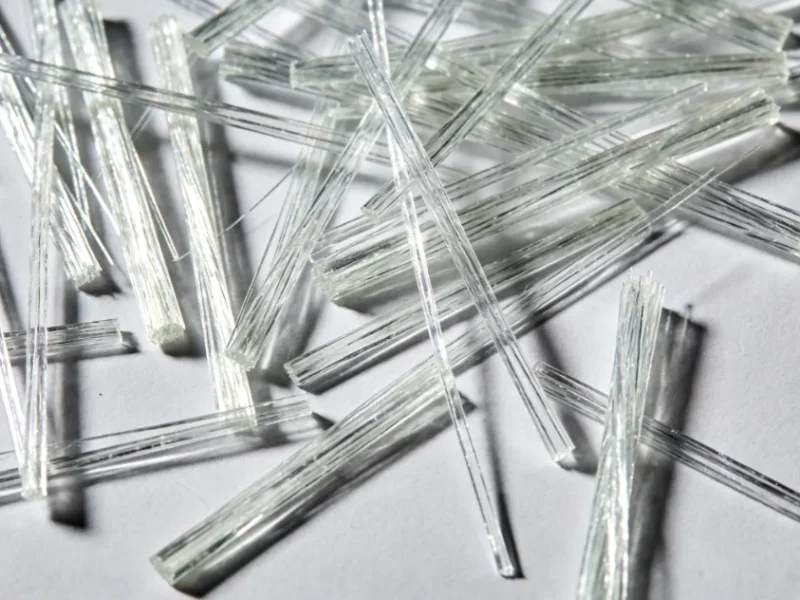
As purchasers, production managers or end customers of fiberglass reinforced plastic (FRP) products, we all know that chopped strand glass fiber is the core reinforcing material of FRP products, which directly determines the strength, toughness, weather resistance, molding effect and even production cost of products. There are various types of chopped strand glass fiber on the market, with different lengths, diameters, sizing types and material contents. Many customers make blind purchases, resulting in cracked, deformed or substandard products, wasted materials, excessive costs, and numerous rework and after-sales problems in the later stage.
In fact, selecting chopped strand glass fiber is not complicated, and the core is to fit the product purpose, match the production process, and balance performance and cost. Written entirely from the customer’s perspective, this article abandons obscure industry jargon, and only focuses on practical selection standards, scenario matching skills and procurement anti-pit tips, helping you accurately select the suitable chopped strand glass fiber, making FRP products qualified and durable, controlling costs, improving yield rate, and easily solving material selection problems.
Understand First: Core Parameters of Chopped Strand Glass Fiber, Key Indicators for Customers
You don’t need to delve into complex production processes before procurement, just keep in mind 4 core parameters, which are the basis for judging the suitability of chopped strand glass fiber and the core basis for communication with suppliers. Each parameter directly affects the final quality of FRP products:
Fiber Diameter: Determines Strength and Finiteness
The diameter of chopped strand glass fiber is usually marked in micrometers (μm), and common specifications include 9μm, 11μm, 13μm and 15μm. The finer the diameter, the better the fiber dispersion, the smoother the product surface, suitable for products with high appearance requirements; the thicker the diameter, the stronger the tensile strength and impact resistance, suitable for load-bearing and high-wear industrial products.
Customer Quick Tip: Choose 9-11μm for appearance parts and thin-walled parts; choose 13-15μm for structural parts and load-bearing parts, balancing strength and formability.
Strand Length: Matching Molding Process Is the Key
Length is the core of selection, common specifications are 3mm, 4.5mm, 6mm, 12mm and 25mm. Different lengths adapt to different production processes, and wrong selection will directly lead to uneven mixing and molding defects. Shorter chopped strands have better dispersion, suitable for high-speed mixing and injection molding processes; longer strands have better reinforcement effect, suitable for molding and hand lay-up processes.
Customer Quick Tip: Choose 3-6mm for injection molding and SMC/BMC molding; choose 12-25mm for hand lay-up and spray molding, avoiding agglomeration of long strands and insufficient reinforcement of short strands.
Sizing Type: Affects Adhesion and Formability
Sizing is the coating on the glass fiber surface, which determines the bonding force between fiber and resin. It is divided into three types: textile type, reinforced type and injection molding special type. Wrong sizing selection will cause delamination of fiber and resin, product cracking and sharp drop in strength.
Customer Quick Tip: Choose reinforced sizing for epoxy resin system; choose general sizing for unsaturated resin; choose special injection molding sizing for PA/PP/ABS plastic modification, eliminating delamination and debonding.